Popular Ringtones 2026
- 4.8
- Rating
- 100.00K
- Installs
- Free
- Price

 Analysis by App-foxy
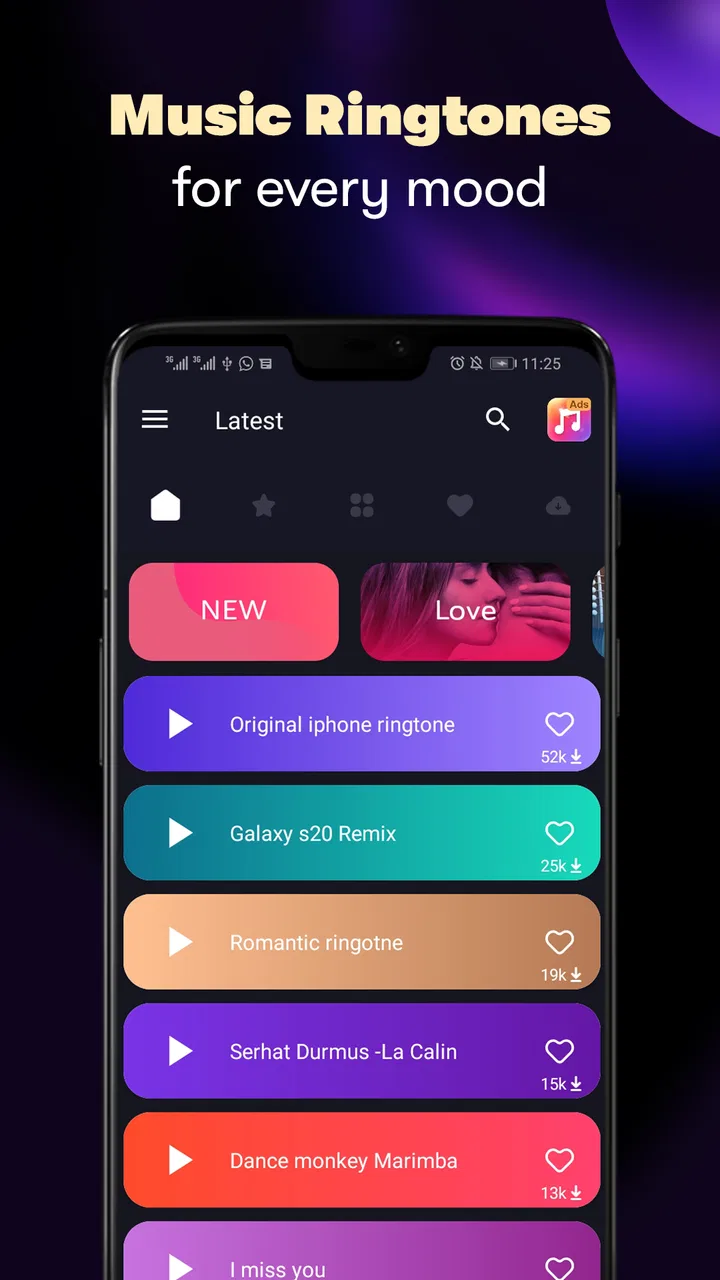
I spent time with Popular Ringtones 2026 as a simple Android ringtone library, and my first impression was clear: this is aimed at people who want to change the sound of their phone without paying for access. It belongs to the Libraries & Demo category, comes from KellyApps, and focuses on browsing popular ringtone choices for offline use. That narrow purpose is also its main appeal. You are not getting a full music player, an audio editor, or a sophisticated sound-design tool; you are getting a focused way to look for a different phone sound.
The app is free, which makes the decision fairly easy from a cost perspective. I can try it without committing money, and that matters for something as personal as a ringtone. A sound that feels fresh today may become irritating after a week, so free access lowers the risk of experimenting. The age rating is Everyone, and the minimum operating-system requirement is Android 7.0, making it relevant to many older Android phones as well as newer devices.
Its store summary highlights offline listening, and that is an important part of the experience. I prefer being able to preview a sound without depending on a mobile connection every time I open the app. For someone who changes devices, travels, or simply wants to avoid streaming while choosing a ringtone, an offline-focused library is more practical than a service that treats every preview like an online media session.
You May Also Like

 Blood Strike: 2.5 Anniversary
Blood Strike’s Loadouts Turn Every Drop Into a Tactical Gamble
A close look at Blood Strike’s custom loadouts: how fast access to signature weapons reshapes its battle royale rhythm, rewards preparation, and narrows the gap between fights.

 Pandora - Music & Podcasts
Pandora’s Music Is Easy to Start, but Harder to Recover
Pandora’s strength is its low-effort path from a seed to a station. Its weak spot is how much confidence it asks you to place in connection, setup, and quiet recovery.

 8 Ball Pool
 Is Built on Rivalries, Rematches, and Routine
A close look at the rivalries, rematches, shared routines, and unanswered safety questions that turn a quick pool match into a persistent mobile community.

 Samsung Music
’s Quiet Strength Is Playing What You Already Own
Its reach comes less from spectacle than from dependable access to a personal library. That simplicity is both the app’s strongest retention engine and its ceiling.

 AccuWeather: Weather Radar
AccuWeather Review: A Quick, Clear Forecast for Everyday Decisions
For everyday plans, the best forecast is the one you can understand quickly. AccuWeather makes rain timing, radar, and local conditions easy to act on, with a few trade-offs.

 Hill Climb Racing
Why Hill Climb Racing Still Turns Crashes Into One More Run
A tiny car, a bumpy hill and one more upgrade: Hill Climb Racing keeps resurfacing because its simple chaos makes every near-miss feel personal.
More From Our News Desk



How the free ringtone library fits into everyday use
I look at this section as a practical guide to deciding whether a ready-made ringtone library suits the way you use your phone. I’ll focus on the small choices that make a sound useful beyond its preview, including how I’d compare options before settling on one. That everyday perspective also makes it easier to see where a dedicated library stops helping and another approach becomes a better fit.
A focused tool rather than a complete audio app
The best way to understand this app is to think of it as a small utility for phone personalization. I would open it when I wanted a new call alert, message sound, or general notification style, not when I wanted to listen to albums or edit a recording. That distinction helps set expectations. Its usefulness comes from reducing the distance between “I want a different ringtone” and “I have found a sound I can live with.”
The free price is the strongest value point that can be judged directly. There is no purchase decision standing between the user and the basic reason for installing it. That does not automatically make every sound valuable, of course. A free library can still waste time if the selection is repetitive or if finding a suitable tone is awkward. In my experience, the real question is whether the app gives you enough variety and a comfortable browsing routine to make that free access worthwhile.
One practical approach is to treat the first session as a filtering exercise rather than trying to choose immediately. I would preview several candidates at a normal phone volume, reject anything that sounds harsh or too busy, and keep only tones that remain recognizable after repeated listening. A sound can be entertaining through headphones but unpleasant when it suddenly plays across a quiet room. That small test is more useful than choosing the most dramatic preview.
Offline access changes the way I choose
Offline availability is especially useful when I am comparing several options in one sitting. I do not have to keep switching between a browser, a streaming service, and phone settings. Once the relevant sounds are available inside the app, I can concentrate on how each one works as an alert. That is a subtle advantage: ringtone selection is less about enjoying a complete track and more about finding a short sound that remains clear when heard unexpectedly.
A good everyday scenario would be setting up a phone for a family member who finds the default alerts difficult to distinguish. I could browse the library with them, play a few alternatives, and choose one with a clear opening rather than a soft or gradual sound. The offline angle is helpful here because the selection process does not need to depend on the strength of the network in the room. It also makes the app suitable for a quick change before leaving home.
Another useful workflow is to choose sounds by context instead of by popularity alone. I might want a calm notification for personal messages, a sharper tone for calls, and something less intrusive for general alerts. The app’s focus on popular ringtones gives me a starting point, but I would still judge each option by where it will be heard: at a desk, in a bag, outdoors, or in a busy public place. A ringtone that sounds pleasant in a quiet room may disappear in traffic.
What the version and adoption suggest
The current version is 4.4, and the app has been available since May 3, 2020. That history gives it more context than a brand-new utility: it has had time to remain available as a ringtone-focused app, while the current release indicates that the project is still presented in an updated form. I would still judge it by the present experience rather than assuming that a longer history guarantees a perfect interface.
It has passed 100K installs and holds a 4.8 average from around 1.1K ratings. Those figures suggest that many users have found the basic idea useful, but they should not replace personal testing. Ringtone preference is unusually subjective. A library can be well received overall and still contain very few sounds that match my taste. I see the rating as encouragement to try it, not proof that every part of the selection will suit me.
The displayed review count is much smaller than the rating count, so I would not rely on short written feedback alone to understand the whole experience. For this type of app, direct browsing tells me more than a general score. I want to know whether the sounds are easy to compare, whether the choices remain appealing after repeated previews, and whether the final setup feels straightforward on my own phone.
Where the value is strongest
The strongest value is low-risk personalization. Because the app is free, I can use it as a testing ground for different phone identities without treating each change as a purchase. That is useful for people who get tired of factory sounds, want a more noticeable call alert, or are setting up a secondary device. It is also a reasonable option for anyone who wants a ringtone library rather than a large general-purpose music application.
I particularly like the idea of using it during a phone reset or a new-device setup. Instead of leaving every alert at its default, I can spend a few minutes creating a basic sound scheme that makes the phone easier to recognize. The practical benefit is not just novelty. Distinct sounds can help me know whether a notification belongs to my phone when several devices are nearby, provided I choose tones that are clearly different without being irritating.
There is also value for users who do not want to create their own audio files. Making a ringtone from a song often involves trimming audio, converting formats, locating the saved file, and navigating system settings. A dedicated library can be more approachable for someone who considers that process unnecessary work. I would recommend this route to a friend who wants a quick result and does not care about using a personally recorded clip.
Tradeoffs before making it your only ringtone tool
The narrow focus is both a strength and a limitation. If I want to edit a voice memo, cut a specific section from a song, assign different sounds to individual contacts, or manage a large personal audio collection, this is not the tool I would choose first. A file manager, audio editor, or the phone’s own sound settings may be better for those jobs. Popular Ringtones 2026 makes more sense when I want ready-made choices rather than complete control.
Another tradeoff is the difference between a popular sound and a distinctive sound. Popularity can make browsing easier, but it may also lead to familiar choices that other people use. If my goal is to make my phone immediately identifiable, I should listen for a tone with a clear character instead of simply selecting the first prominent option. I would also avoid sounds that begin too quietly, because they may be missed when the phone is in a pocket or another room.
Offline browsing is convenient, but it does not remove the need for judgment. I would still test the selected sound through the phone’s actual speaker, not only through headphones. Speaker playback can change the balance between bass, sharp tones, and background effects. A preview that feels polished privately may become piercing in a small office. This is one of the most important practical checks because the final listener is usually everyone nearby, not just the person holding the phone.
I would also keep expectations realistic about the meaning of “2026” in the name. It presents the app as a current-style ringtone collection, but the useful question is whether the available sounds fit my taste today. A label suggesting freshness does not guarantee that every choice will feel modern or original. I would install it for the library concept and offline convenience, then make the decision based on the actual sounds I enjoy.
Who should install it
This app is a good match for Android users who want a free, uncomplicated way to explore ringtone ideas. It should appeal to someone who has kept the default alert for too long, someone preparing a phone for an older relative, or someone who wants a more noticeable call sound without learning audio-editing software. The Everyone rating also makes it a comfortable option for general household use, while Android 7.0 support keeps it relevant to devices that are not running the newest software.
I would also suggest it to people who make frequent short-term changes. Perhaps I want one sound during a holiday, another while working, and a quieter option at night. Since there is no purchase barrier, experimenting is less frustrating. The best method is to choose a small rotation rather than constantly changing everything: one call sound that is easy to hear, one message alert that is not disruptive, and one backup option for a different environment.
It is less suitable for users who expect a full music-service experience, a professional audio editor, or highly detailed personalization controls. If I already have a collection of recordings and want to trim exact sections, I would rather use an editor and the phone’s built-in controls. Likewise, if I want a broad catalog of songs instead of short ringtone-oriented choices, a dedicated music or audio service may offer a better fit, even though it may not provide the same simple offline browsing purpose.
Questions I would answer before installing
Is it actually free to use? Yes, the listed price is Free, so the basic decision is about time and suitability rather than an upfront charge. I would still approach any free app sensibly and review the on-device experience before making it part of my regular setup, but there is no paid purchase to weigh against the benefit of changing a ringtone.
Will it work on an older Android phone? The minimum requirement is Android 7.0, so owners of devices running that version or a newer one have a reasonable compatibility starting point. I would check the phone’s software version before installing, especially on an older handset. That is a quick check that can prevent frustration and is more useful than assuming every Android phone is supported.
Can I use it without an internet connection? Its store summary specifically emphasizes offline use, which is one of the reasons I see it as more practical than a purely streaming-based option. I would still open the app and prepare the sounds while connected if the initial setup requires it, then rely on the offline-oriented library when choosing and previewing later. That approach is particularly sensible before travel.
Is it better than making a ringtone myself? That depends on what I value. It is better for speed, convenience, and ready-made discovery. Creating a ringtone myself is better when I want a precise song fragment, a personal recording, or a sound nobody else is likely to have. I would choose this app for quick personalization and an editor for creative control; neither replaces the other completely.
Will I find a sound I like? No library can guarantee that because ringtone taste is personal. The app’s strong average rating and substantial install base make it worth trying, but I would give myself a short browsing session rather than assuming the first option will work. If the available sounds do not suit my phone, the fact that access is free makes uninstalling a painless decision.
My buy-or-skip verdict
I would recommend installing Popular Ringtones 2026 if the goal is simple: browse free ringtone choices, preview them with an offline-friendly approach, and give an Android phone a different sound. KellyApps has kept the product focused, and that focus makes it easier to understand than a general audio application. The current 4.4 version, broad install reach, and high average rating add confidence that it is worth a trial, while the Everyone rating keeps the intended audience broad.
I would skip it if I needed precise audio editing, a personal sound library, or advanced contact-by-contact control. In those situations, the usual alternatives are more appropriate because they give me ownership and flexibility rather than a ready-made selection. I would also skip it if I already have a carefully organized collection of custom tones and do not need another browsing source.
For everyone else, the free price changes the balance in its favor. I can test the library, compare sounds on the phone’s real speaker, and keep only what works in daily life. My final advice is to judge each ringtone by clarity, comfort, and context—not just by how exciting its preview sounds. If you want quick, no-cost phone personalization rather than a complete audio toolbox, this is a sensible app to try.
FAQs for Popular Ringtones 2026
01What features does Popular Ringtones 2026 offer?
Popular Ringtones 2026 provides a vast selection of high-quality ringtones across various genres, including pop, classical, and ambient. Users can easily browse and preview ringtones, customize their selections, and set them as default or contact-specific tones. The app also offers a user-friendly interface for easy management of your ringtone library.
02Is Popular Ringtones 2026 free to use?
The app is free to download and offers a selection of free ringtones. However, it includes in-app purchases for premium ringtones and an ad-free experience. Users can choose to purchase individual ringtones or subscribe for full access to the premium catalog. This ensures flexibility depending on the user's preference and budget.
03How can I set a ringtone from the app as my default ringtone?
After downloading your chosen ringtone, the app provides a simple step-by-step guide to set it as your default. Navigate to the ringtone library within the app, select your desired ringtone, and choose the option to set it as your default ringtone. Ensure that the app has the necessary permissions to modify system settings on your device.
04Is Popular Ringtones 2026 compatible with all Android and iOS devices?
Popular Ringtones 2026 is designed to be compatible with a wide range of Android and iOS devices. However, users are advised to check the app's system requirements on the Google Play Store or Apple App Store to ensure compatibility with their specific device model and operating system version.
05Does Popular Ringtones 2026 require an internet connection to function?
An internet connection is required for downloading ringtones and accessing online features. Once ringtones are downloaded, they can be accessed offline. Some features, such as syncing across devices or accessing new content, will require an active internet connection to function effectively.
Pros
- Extensive library of diverse ringtones.
- User-friendly interface for easy navigation.
- Regular updates with new ringtones.
- Allows customization of ringtone duration.
- High-quality sound for all ringtones.
Cons
- Contains ads that may interrupt use.
- Limited free ringtones; many are paid.
- Requires internet for full functionality.
- In-app purchases can be costly.
- Some ringtones can be repetitive.

Popular Ringtones 2026
Gallery